
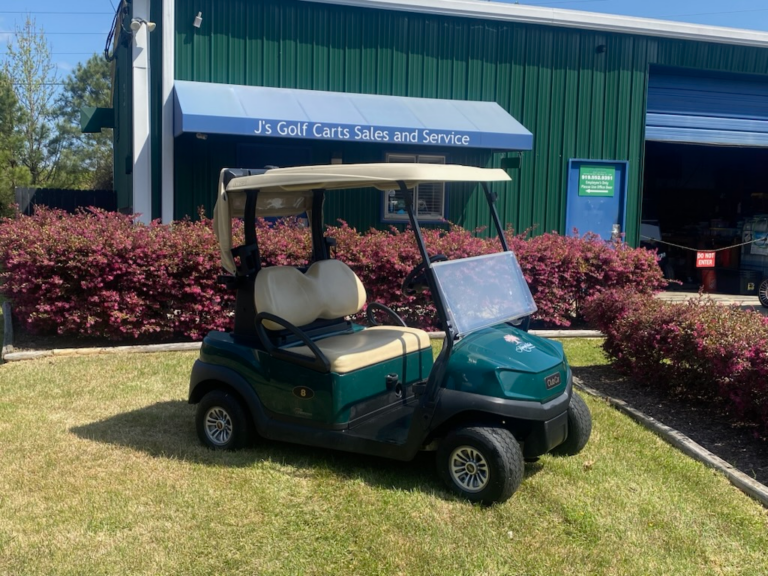
Buying a used golf cart can be a great way to find a dependable cart while staying within your budget.
Throughout North Carolina, used golf carts are commonly purchased for neighborhood transportation, campgrounds, recreational properties, golf courses, farms, and everyday community driving.
However, two golf carts that look similar from the outside can have very different maintenance histories and mechanical conditions.
Batteries, brakes, tires, steering components, suspension systems, and electrical equipment can all affect the true value of a used golf cart.
Taking the time to inspect a cart carefully before purchasing can help you avoid unexpected repairs and make a more informed decision.
This guide covers what to look for when buying a used golf cart, including the most important areas to inspect, questions to ask, and warning signs that may require additional attention.
Start With the Golf Cart’s Age, Make, and Model
Before looking at individual components, start by learning as much as possible about the golf cart itself.
Ask the seller about:
Model year
Manufacturer
Specific model
Serial number
Previous ownership
Maintenance history
Major repairs or upgrades
How the cart was typically used
Popular golf cart manufacturers such as Club Car, E-Z-GO, Yamaha, and Atlas may have different components, features, battery systems, and maintenance requirements.
The age of the cart does not automatically determine whether it is a good purchase.
An older cart that has been properly maintained may sometimes be in better condition than a newer cart that has experienced heavy use or limited maintenance.
Buyers should focus on the overall condition of the cart rather than the model year alone.
Customers comparing available options can browse J’s Golf Carts’ used golf cart inventory to explore different models, configurations, and price ranges.
Inspect the Golf Cart Batteries Carefully
Battery condition is one of the most important things to inspect when buying an electric used golf cart.
Golf cart batteries can represent a significant ownership expense, so understanding their age and condition before purchasing can help you determine the true value of the cart.
For lead-acid batteries, inspect for:
Corrosion around battery terminals
Damaged cables
Cracked battery cases
Swelling or leaks
Low water levels
Loose connections
Excessive buildup around terminals
You should also ask when the batteries were installed and whether they have been regularly maintained.
If the cart uses lithium batteries, ask about the age of the battery, charging history, warranty coverage, and whether the battery system has experienced any previous problems.
During a test drive, pay attention to signs of reduced battery performance such as noticeable power loss, limited range, slow acceleration, or difficulty maintaining speed.
Proper charging and routine maintenance can help extend battery lifespan. Buyers interested in learning more can also read our Golf Cart Battery Maintenance Guide.
Take the Golf Cart for a Test Drive
Whenever possible, take a used golf cart for a test drive before purchasing it.
A test drive can reveal problems that may not be noticeable while the cart is parked.
During the drive, pay attention to:
Smooth acceleration
Steering response
Brake performance
Unusual noises
Vibrations
Hesitation when accelerating
Performance in reverse
Overall ride quality
The cart should accelerate smoothly without excessive jerking or hesitation.
Steering should feel controlled without excessive looseness, and the cart should generally track straight while driving on a level surface.
Listen carefully for grinding, clicking, squeaking, or knocking sounds coming from the wheels, suspension, drivetrain, or steering system.
Small noises do not always indicate a serious problem, but unusual sounds should be inspected before purchasing.
Check the Tires, Wheels, Steering, and Suspension
Tires and suspension components can reveal a lot about how a golf cart has been maintained.
Start by checking the tires for:
Uneven wear
Low tread
Cracking
Dry rot
Damage to the sidewalls
Incorrect tire pressure
Uneven tire wear may sometimes indicate alignment, suspension, or steering problems.
Inspect the wheels for visible damage and make sure they appear properly mounted.
You should also check the steering by turning the wheel while the cart is parked and again while driving.
Excessive steering play, pulling to one side, or unusual movement may indicate worn steering components or suspension parts.
If the cart has been lifted or equipped with larger aftermarket tires, pay additional attention to steering and suspension condition because modified setups may place additional stress on certain components.
Inspect the Brakes and Parking Brake
Brake condition should always be checked before purchasing a used golf cart.
During your test drive, make sure the cart stops smoothly and predictably.
Watch for warning signs such as:
Grinding noises
Squeaking
Poor stopping performance
Excessive brake pedal travel
Pulling to one side
Vibration while braking
You should also test the parking brake to make sure it engages and releases properly.
Golf cart brakes experience normal wear over time, especially on carts used frequently in neighborhoods, campgrounds, or areas with hills.
If you are uncertain about the condition of the braking system, having the cart professionally inspected can help identify worn components before they become larger problems.
J’s Golf Carts offers professional golf cart service and repair for customers who need maintenance, inspections, or repairs.
Look Over the Body, Frame, and Overall Condition
Cosmetic wear is common on used golf carts and does not necessarily mean the cart has mechanical problems.
Minor scratches, faded plastics, or worn seats may simply reflect normal use.
However, buyers should look more carefully for damage involving the structure of the cart.
Inspect for:
Cracks in body panels
Rust or corrosion
Bent frame components
Signs of previous collision damage
Loose body panels
Damaged roof supports
Excessive wear underneath the cart
Pay particular attention to carts that may have been regularly used near beaches or coastal areas.
Salt, moisture, and sand exposure can contribute to corrosion on metal components and electrical connections if the cart has not been properly cleaned and maintained.
Checking underneath the cart can often reveal problems that are not visible during a quick exterior inspection.
Test the Electrical System and Accessories
Many modern golf carts include electrical equipment and accessories that should be tested before purchasing.
Depending on the cart, check:
Headlights
Brake lights
Turn signals
Horn
Dashboard display
USB charging ports
Bluetooth or audio systems
Battery gauge
Charger
Reverse warning system
Additional lighting
Aftermarket accessories are common on used golf carts.
Lift kits, lighting packages, sound systems, rear seats, upgraded controllers, and custom wiring can add value when installed correctly.
However, poorly installed electrical accessories may create charging problems, battery drain, wiring issues, or unreliable operation.
Look for loose wires, exposed connections, excessive electrical modifications, or components that do not appear professionally installed.
Ask About Maintenance History and Previous Repairs
A seller who can provide information about the cart’s maintenance history can make it easier to understand its current condition.
Useful questions include:
When were the batteries replaced?
How often was the cart serviced?
Have the brakes been repaired or replaced?
Has the motor or controller required repair?
Has the charger ever been replaced?
Has the cart been stored indoors?
Has it experienced any collision damage?
Have any major components been upgraded?
Why is the cart being sold?
Maintenance records are especially helpful when available.
Regular service involving batteries, brakes, tires, steering, suspension, and electrical systems can help support reliable long-term ownership.
For customers who need service but cannot easily transport their cart, J’s Golf Carts also offers convenient golf cart pickup and delivery.
Consider How You Plan to Use the Golf Cart
Before purchasing a used golf cart, think about where and how you plan to drive it.
Different buyers may need very different features depending on whether the cart will be used for:
Neighborhood transportation
Campgrounds
Recreational properties
Golf courses
Farms
Community events
Short local trips
Consider factors such as seating capacity, battery range, storage space, speed, comfort, and available safety equipment.
If you plan to operate the cart on public roads, requirements can vary depending on the municipality and the type of vehicle.
Equipment such as headlights, brake lights, turn signals, mirrors, seat belts, and other safety features may be required depending on local regulations.
Buyers planning to use their cart beyond private property can learn more by reading our guide to North Carolina golf cart street rules.
Calculate the True Cost of the Used Golf Cart
The purchase price should not be the only factor you consider when comparing used golf carts.
A lower-priced cart may initially appear to be a great deal, but upcoming repairs or replacement parts can quickly increase the total cost.
Potential expenses may include:
Replacement batteries
New tires
Brake repairs
Charger replacement
Suspension repairs
Steering components
Electrical repairs
Seat replacement
Accessories or safety equipment
For example, a used cart with an attractive purchase price may not provide the best overall value if the batteries, tires, and brakes all need replacement shortly after purchase.
Comparing the condition of each cart alongside the asking price can help you determine which option offers better long-term value.
Used Golf Cart Inspection Checklist
Before purchasing a used golf cart, take a few minutes to review each major area.
Use this inspection checklist:
Confirm the year, make, and model
Check the serial number
Ask about previous ownership
Inspect battery age and condition
Test the charger
Check tires for wear or damage
Inspect wheels
Test steering
Check suspension
Test the brakes
Test the parking brake
Inspect the frame and body
Check for corrosion
Test headlights and brake lights
Test turn signals and horn
Inspect aftermarket accessories
Take the cart for a full test drive
Ask about maintenance history
Ask about previous repairs
Consider upcoming maintenance costs
Taking a systematic approach can make it easier to compare different carts and identify potential problems before making a purchase.
Final Thoughts on Buying a Used Golf Cart
Buying a used golf cart can be a great way to find a dependable cart at a more affordable price.
The key is taking the time to understand what you are buying.
Battery condition, brakes, tires, steering, suspension, electrical systems, maintenance history, and overall condition can all affect the long-term reliability and value of a used cart.
A thorough inspection and test drive can help you identify potential problems and make a more confident purchasing decision.
At J’s Golf Carts, we help customers compare available carts, understand different models and features, and find the right golf cart for their lifestyle and driving needs.
Whether you are shopping for a used golf cart, considering a newer model, or need service and maintenance support, our team is here to help every step of the way.