
Choosing the Right Golf Cart Battery in 2026
If you are shopping for a golf cart or thinking about upgrading your current setup, the battery you choose is one of the most important decisions you will make.
It affects how your cart drives, how often you need to maintain it, how long it lasts, and how much you will spend over time.
Today, most golf cart owners are choosing between two main options: traditional lead-acid batteries and newer lithium battery systems. While both can power your cart effectively, they offer very different experiences in terms of convenience, reliability, and performance.
In this guide, we break down the key differences so you can confidently choose the best battery for your needs in Fuquay-Varina, Holly Springs, and surrounding North Carolina areas.
What Are Lead-Acid Golf Cart Batteries?
Lead-acid batteries have been the standard in golf carts for decades. They are widely used, relatively affordable upfront, and still found in many carts on the market today.
These systems typically consist of multiple batteries working together to power your cart. While they are dependable, they do require regular maintenance to stay in good condition.
Pros of Lead-Acid Batteries
- Lower upfront cost
- Easy to find and replace
- Proven, reliable technology
Cons of Lead-Acid Batteries
- Require regular maintenance (watering and cleaning)
- Shorter lifespan compared to lithium
- Slower charging times
- Heavier, which can impact performance
For many buyers looking at used golf carts, lead-acid batteries remain a practical and budget-friendly option.
What Are Lithium Golf Cart Batteries?
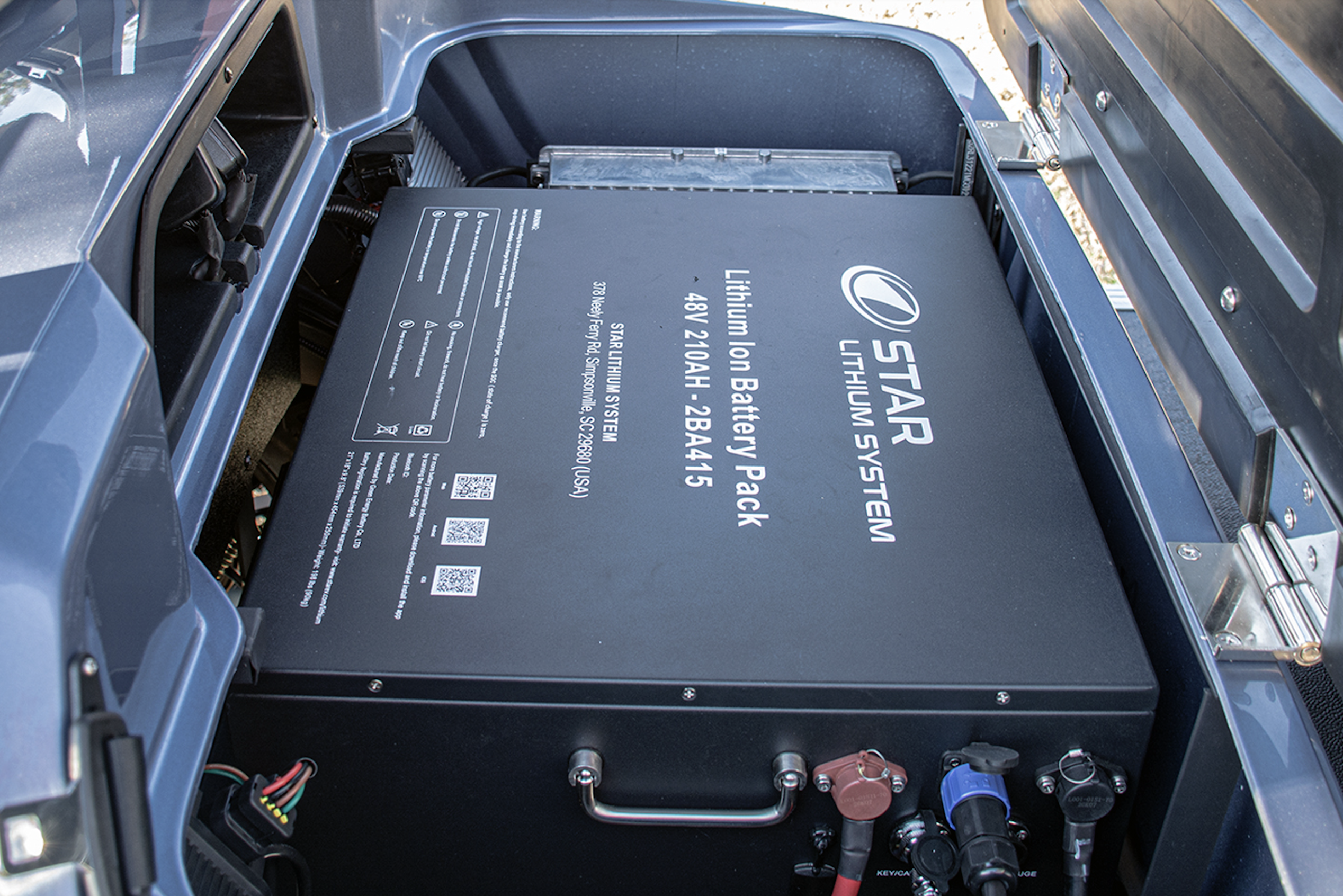
Lithium batteries are a newer, more advanced option that has quickly become the preferred choice for many golf cart owners.
Unlike lead-acid systems, lithium batteries are more compact, efficient, and require virtually no maintenance. They are designed to deliver consistent power and faster charging, making them ideal for everyday use.
Pros of Lithium Batteries
- Longer lifespan (often 2–4x longer than lead-acid)
- Fast charging times
- No maintenance required
- Lighter weight for improved performance
- Consistent power throughout the charge
Cons of Lithium Batteries
- Higher upfront cost
- Requires compatible charging systems
Many newer models in our new golf carts lineup are now built with lithium options due to their long-term benefits and ease of use.
Key Differences: Lithium vs Lead-Acid
Lifespan
Lead-acid batteries typically last around 3–5 years with proper maintenance. Lithium batteries can last 8–10 years or more, making them a long-term investment.
Maintenance
Lead-acid batteries require ongoing care, including watering and cleaning. Lithium batteries are completely maintenance-free.
Charging Time
Lithium batteries charge significantly faster than lead-acid, making them more convenient for daily use.
Performance
Lithium batteries deliver consistent power from a full charge down to low levels. Lead-acid batteries gradually lose performance as they drain.
Weight
Lithium batteries are much lighter, which improves acceleration, handling, and efficiency.
Cost Over Time
While lithium batteries cost more upfront, they often save money over time due to their longer lifespan and lack of maintenance.
Real-World Performance: What Drivers Notice
While specs are helpful, what really matters is how your golf cart feels in everyday use.
With lead-acid batteries, many drivers notice a drop in performance as the battery drains. Acceleration slows, hills become harder to climb, and the overall ride becomes less responsive over time.
Lithium batteries provide a completely different experience. Power stays consistent from start to finish, so your cart feels just as strong at the end of a ride as it does at the beginning.
This is especially important for neighborhood driving, where frequent stops, short trips, and daily use are common. For drivers in areas like Fuquay-Varina and Holly Springs, this consistency can make a noticeable difference in overall enjoyment.
Charging, Storage, and Everyday Convenience
One of the biggest differences between these battery types is how easy they are to live with day-to-day.
Lead-acid batteries require more attention. You need to monitor water levels, avoid draining them too low, and properly maintain them during periods of inactivity.
Lithium batteries are far more user-friendly. There is no maintenance, no watering, and no strict charging routine. You can plug them in whenever it is convenient without worrying about damaging the battery.
For homeowners who want a simple, reliable experience, lithium batteries make ownership significantly easier.
Which Battery Is Best for You?
The right choice depends on how you use your golf cart.
Choose Lead-Acid If:
- You want a lower upfront cost
- You don’t mind regular maintenance
- You use your cart occasionally
Choose Lithium If:
- You want long-term reliability
- You prefer zero maintenance
- You use your cart frequently
- You want better performance and faster charging
Lithium is also a great option if you are building or upgrading custom golf carts and want the best overall experience.
Battery Considerations for North Carolina Drivers
In North Carolina communities like Fuquay-Varina and Holly Springs, golf carts are often used for short trips, neighborhood driving, and everyday convenience.
Because of this, reliability and ease of use are especially important.
Lithium batteries are ideal for:
- Frequent stop-and-go driving
- Daily use around the neighborhood
- Consistent performance in varying temperatures
Lead-acid batteries can still be a good fit for occasional use or budget-focused buyers, but many local drivers are making the switch to lithium for convenience alone.
When Should You Replace Your Golf Cart Battery?
Over time, all batteries begin to lose performance. Knowing when to replace your battery can help you avoid breakdowns and keep your cart running smoothly.
Signs it may be time for a replacement include:
- Reduced driving range
- Slower acceleration
- Longer charging times
- Visible corrosion (for lead-acid batteries)
If you are experiencing any of these issues, it may be time to explore our service packages to diagnose the problem and determine the best upgrade option.
Explore Golf Carts Built for Performance
If you are considering upgrading your battery or purchasing a new cart, choosing the right setup from the start makes a big difference.
At JS Golf Carts, we offer a wide selection of options designed for performance, reliability, and everyday use. Whether you are browsing used golf carts, exploring new golf carts, or building fully custom golf carts, our team can help you find the right fit.
If your current cart needs attention, we also offer convenient pickup and delivery services to make maintenance and upgrades as easy as possible.
Final Thoughts
Choosing between lithium and lead-acid golf cart batteries comes down to your priorities.
Lead-acid batteries are a solid choice for those looking to save upfront and don’t mind maintenance. Lithium batteries, while more expensive initially, offer better performance, longer lifespan, and a much more convenient ownership experience.
As golf carts continue to grow in popularity across North Carolina, investing in the right battery setup will help you get the most out of your cart for years to come.