
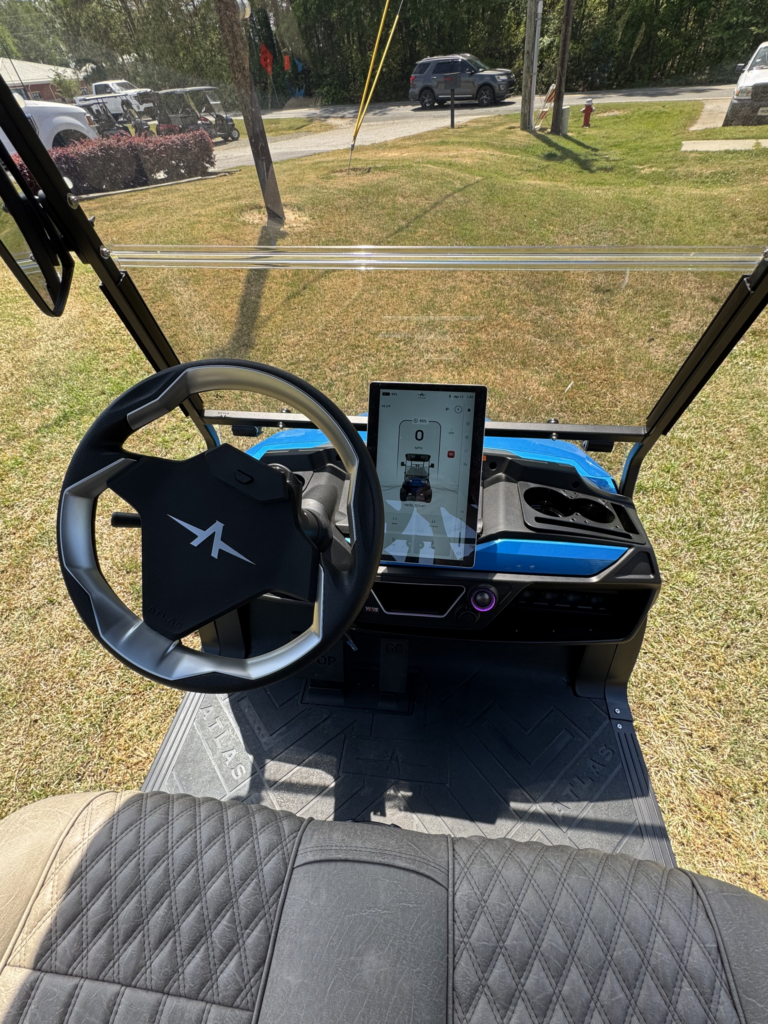
A golf cart lithium conversion replaces an electric cart’s lead-acid battery system with a compatible lithium system. It can reduce battery upkeep and weight, but buying a battery with the right voltage is only part of the job. The charger, mounting hardware, electrical connections and the cart’s power requirements all need to work together.
The first question is whether your current cart is worth upgrading. If it is in good condition and its batteries are nearing replacement, conversion may be worth considering. If it also needs major mechanical or electrical repairs, compare the complete repair-and-conversion estimate with the cost of another cart.
This guide focuses on converting an existing electric golf cart. Changing a gas cart to electric is a different project.
Check the cart before buying a battery kit
Short range or weak hill performance does not automatically mean the batteries are the only problem. Charging faults, damaged connections, dragging brakes or other issues can affect how the cart performs. Installing lithium will not repair those problems.
Have the current battery and charging system checked, along with the frame, brakes, steering and suspension. Tell the technician about modifications such as larger tires, a lift kit, a different motor or an upgraded controller. Those details can change the conversion requirements.
Our golf cart service team can help assess the cart before you commit to parts. For a broader comparison of the battery types, see our lithium vs lead-acid battery guide.
Match the kit to the make, model and year
A kit described as suitable for a golf cart is not necessarily suitable for your golf cart. Even carts from the same manufacturer can use different trays, harnesses, charger connections and control systems.
Before ordering, collect these details:
· Make, model, model year and serial number.
· Original electrical system voltage and the labels on the current batteries.
· Motor or controller upgrades and other electrical modifications.
· Battery compartment dimensions and the condition of its supports.
· Charger model and the accessories powered by the cart.
Look for written compatibility with your specific vehicle. A model-specific kit may include mounting brackets, a wiring harness and a charger connection that a battery-only purchase does not. Ask what is included and what must be purchased separately.
Voltage, capacity and power are different things
Match the electrical system voltage
The lithium system must be approved for the cart’s electrical system. Replacing a 36-volt system with a 48-volt battery is not a routine battery replacement. It can require changes to other components and should be evaluated as a separate electrical conversion.
Battery product names do not always use the same nominal voltage wording as the cart. Follow documented compatibility rather than guessing from a label or connector that appears to fit.
Choose capacity for the driving you do
Capacity helps determine how much energy the battery stores. Compare usable energy and the manufacturer’s expected range under stated conditions. Amp-hour figures alone can be misleading when comparing systems with different voltages or different usable discharge limits.
Describe your longest normal outing, passenger load and terrain. Include lights, audio equipment and other accessories. Choosing a battery around a best-case range claim can leave too little margin for hills or extra trips.
Make sure the battery can supply the required power
A battery must also deliver the current the motor and controller demand. A pack can have enough stored energy for a route but still be unsuitable for the cart’s power requirements.
The battery management system, often called a BMS, monitors operating limits and can shut the battery down when those limits are exceeded. Ask the installer to confirm both continuous and peak current compatibility, particularly on carts with upgraded controllers or motors.
What belongs in a complete lithium conversion
The battery is the largest part of the purchase, but it is not the entire system. A complete plan should address the following components.
· Compatible charger. Use one approved for the lithium battery’s charging requirements. A plug that fits does not establish compatibility.
· Secure mounting. The battery needs appropriate brackets or restraints, with clearance for wiring and protection from movement.
· Cables and protection. Cable sizing, connections and required protective components must match the kit and vehicle specifications.
· Battery gauge. The old lead-acid voltage gauge may not accurately show lithium charge remaining. Use a compatible state-of-charge display where required.
· Accessory power. Lights, stereos and other lower-voltage accessories may need a compatible DC-to-DC converter and revised connections.
· Vehicle integration. Some carts require specific harnesses, charger receptacles or changes to the original charging controls.
Our golf cart parts department is a starting point for checking what your cart needs. Have the vehicle information ready before comparing kits or individual components.
Compare the full installed cost
A battery-only price can leave out much of the work. Ask for an itemized estimate that lists the battery, charger, mounting hardware, gauge, wiring, accessory-power changes and installation labor. Include any repairs found during the inspection and how the old batteries will be recycled.
Also ask who handles warranty support and what coverage applies to the battery, charger and installation. Confirm whether the manufacturer places any conditions on installation, charging or modifications.
This makes it easier to compare two estimates fairly. A lower quote may use a smaller-capacity battery or exclude components that another installer includes. The right question is what it will cost to have your particular cart running correctly with the range you need.
What a lithium upgrade can and cannot change
Replacing a lead-acid pack with a suitable lithium system generally reduces battery weight and removes the need to water the batteries. Range, charging time and performance changes depend on the specific system, the condition of the old batteries and how you drive.
Do not count on a conversion to increase top speed. The controller, motor and vehicle settings still matter. Likewise, a worn suspension or poor braking system remains a problem after the battery swap.
If you are comparing a conversion with buying a different vehicle, review our used golf carts alongside the repair estimate. An upgrade may make sense for a sound cart you already like; a different cart may be more practical if you also need different seating or substantial repairs.
Plan for cold weather and storage
Lithium batteries have temperature limits for charging and operation. Follow the instructions for the exact battery you buy. Some systems include heating or cold-charge protection, but that is not a feature to assume every pack has.
For North Carolina owners who leave a cart parked through colder stretches, ask about storage charge level, shutoff procedures and whether the charger should remain connected. Recommendations vary by battery and charger. Accessories can also draw power while the cart is parked, so include them in the storage discussion.
Common questions about converting to lithium
Can I use my current golf cart charger?
Only if the battery and charger manufacturers confirm compatibility and any required settings are correctly configured. Otherwise, include a replacement charger in the conversion. Do not decide based on the connector alone.
Can any electric golf cart be converted?
Many can, but compatibility and condition need checking. Some models have more readily available conversion kits than others. An older cart with substantial corrosion or electrical damage may need repairs before conversion makes sense.
Will lithium give me more range?
It may, but the battery’s usable capacity and your driving conditions determine the outcome. Replacing a worn pack can also create a large improvement that would not reflect a fair comparison with healthy lead-acid batteries. Ask for an estimate based on the proposed pack and your route.
Can I install a conversion myself?
The difficulty varies by cart and kit. High-current battery systems require correct wiring, mounting and protective components. Unless you have the relevant experience and the manufacturer’s installation instructions, have a qualified installer handle the work.
Discuss a lithium conversion with J’s Golf Carts
J’s Golf Carts sells and installs lithium golf cart batteries in Holly Springs. Contact our team with your cart’s make, model and year, photos of the battery compartment and charger, and a description of how you use it. We can discuss the next steps for checking compatibility and preparing an estimate.
If getting the cart to the shop is difficult, ask about our golf cart pickup and delivery service and availability for your location.