
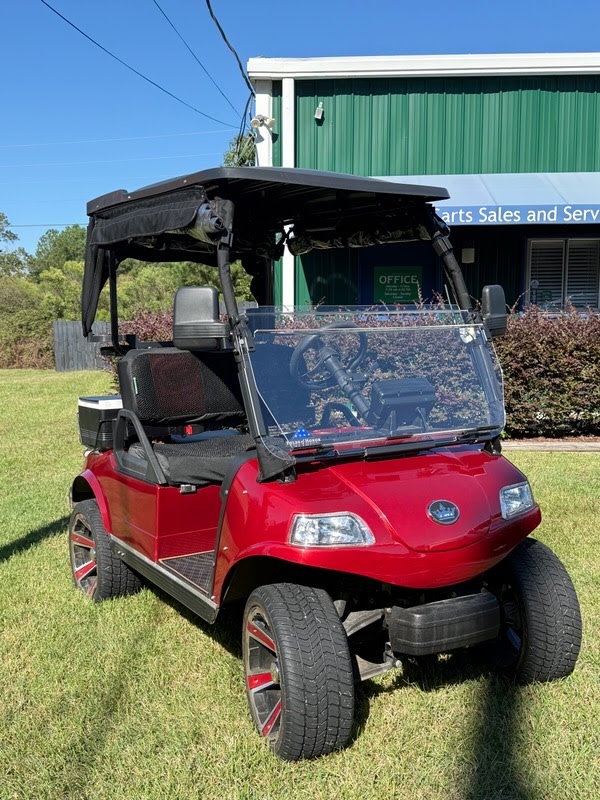
An electric golf cart is often a good fit for neighborhood trips when you can charge where you park. A gas golf cart can make more sense for long days on a property where stopping to recharge would be inconvenient. The better choice depends on your route, your passengers and how you will keep the cart ready to go.
There is another decision within the gas vs electric golf cart comparison: an electric cart with flooded lead-acid batteries has different upkeep from one with lithium batteries. Before buying, compare the actual models and battery systems, rather than treating all electric carts as the same.
Gas and electric golf carts at a glance
| What matters | Gas golf cart | Electric golf cart |
| Keeping it running | Refuel when needed | Recharge with a compatible charger |
| Noise and exhaust | Engine noise and exhaust while running | Quieter operation with no tailpipe exhaust |
| Routine care | Engine and fuel system service | Battery care depends on the battery type |
| Long days away | Useful where charging is unavailable | Needs enough usable range or charging access |
| Used cart checks | Engine condition and service history | Battery health and charging system |
| Hills and loads | Check the specific model’s ratings | Check the specific model’s ratings |
Start with where you will drive and park
Think through a normal week. Will you take a few short rides and return to the same garage, or spend hours moving around a large property? How many people usually ride with you? Is the route flat, or does it include repeated hills?
For a household in Holly Springs or the Raleigh area that has a suitable charging spot and mostly takes short trips, electric is worth considering first. You can build charging into your parking routine. A property owner who needs the cart throughout the day, far from an outlet, may prefer the flexibility of gas.
Check community rules and the requirements for any roads you plan to use before choosing a cart. Buying gas or electric does not, by itself, determine where the vehicle can legally operate. Our complete golf cart buying guide covers other decisions to make before you shop.
Range matters more than a best case mileage claim
There is no single range figure that applies to every gas or electric golf cart. For an electric model, battery capacity and condition matter, along with passenger weight, hills, speed, tires and accessories. Gas carts also vary in fuel capacity and consumption.
Compare your busiest likely day with the cart’s expected performance under similar conditions. A range claim based on a light load and flat ground may not describe a six-passenger cart on a hilly route. Ask how the stated range was measured and allow room for extra trips.
Gas offers quick refueling when you need to keep moving. Electric requires charging time, but that may not affect your day if the cart is parked for long enough between outings. Before buying electric, check the charger’s electrical requirements and whether your parking area provides a suitable outlet and charging environment.
Gas vs lithium golf carts is a different comparison
A lower-priced electric cart may use flooded lead-acid batteries. These require regular electrolyte checks and care according to the manufacturer’s instructions. A lithium system eliminates battery watering and is generally lighter than a comparable lead-acid setup, though the exact weight difference depends on the packs.
Lithium can be appealing if you want electric operation with less battery upkeep. It still needs a compatible charger, proper storage and a battery system sized for your driving. It also does not eliminate brake, tire, steering or suspension maintenance.
When comparing prices, identify the battery type, capacity, charger and warranty included with each cart. Our lithium vs lead-acid golf cart battery guide explains that choice in more detail.
Compare ownership costs beyond the purchase price
The cheapest cart to buy is not necessarily the least expensive to keep. Two carts with similar asking prices may have very different repair needs or battery life remaining.
For gas, consider fuel use and scheduled engine service, including oil, filters and other items required by that model. For electric, consider charging costs, battery care and eventual battery replacement. For either type, budget for tires, brakes and repairs as the cart ages.
A useful comparison is the purchase price plus immediate repairs, expected routine service and any major expense likely during your ownership. Ask for those items separately. This is especially important if one used electric cart has an aging battery pack and another has a documented recent replacement.
Which type is better on hills?
Do not assume every gas cart climbs better than every electric cart. Hill performance depends on the motor or engine, controller, gearing, battery system, tires and load. A cart that feels lively with one person may feel very different with its seats occupied.
Test the model you are considering and discuss the steepest part of your normal route. Confirm its passenger and load ratings. If you plan to carry equipment or tow anything, check the manufacturer’s limits rather than judging capability by engine noise or battery voltage.
Braking matters too. A cart needs to descend and stop safely with the load you intend to carry, not simply make it uphill.
Buying used means checking the individual cart
With a used gas cart, ask about service records and look for starting problems, leaks, unusual smoke or inconsistent performance. With a used electric cart, ask for battery age, warranty information and a condition assessment. A cart moving around a parking lot does not prove that its battery can complete your normal route.
Both types need an inspection of the frame, steering, brakes, tires and suspension. Our used golf cart inspection checklist gives you a more detailed list to take shopping. If you already own a cart and are unsure about its condition, a golf cart service appointment can help you decide what needs attention.
Questions buyers ask about gas and electric carts
Is a gas golf cart faster than an electric one?
Not necessarily. Compare the published specifications for the exact models. Power source alone does not establish top speed, and modifications can affect safety, reliability and warranty coverage.
Is electric better for occasional use?
It can be, provided you follow the battery and charger manufacturer’s storage instructions. Occasional use does not mean you can ignore the cart for months. Gas models also need a storage plan for their fuel and engine systems.
Should I buy lithium instead of gas?
Consider lithium if you want quieter rides, have reliable charging access and prefer to avoid flooded battery watering. Consider gas if refueling suits your use better. Compare complete vehicles, including condition, seating, range and service support, before deciding.
Compare carts at J’s Golf Carts in Holly Springs
Start with our new golf carts and used golf carts to see current options. Bring your questions about charging, passengers and the routes you plan to drive. At J’s Golf Carts in Holly Springs, we can help you compare available carts against those needs.
Contact J’s Golf Carts before your visit to discuss what you are looking for and check availability.